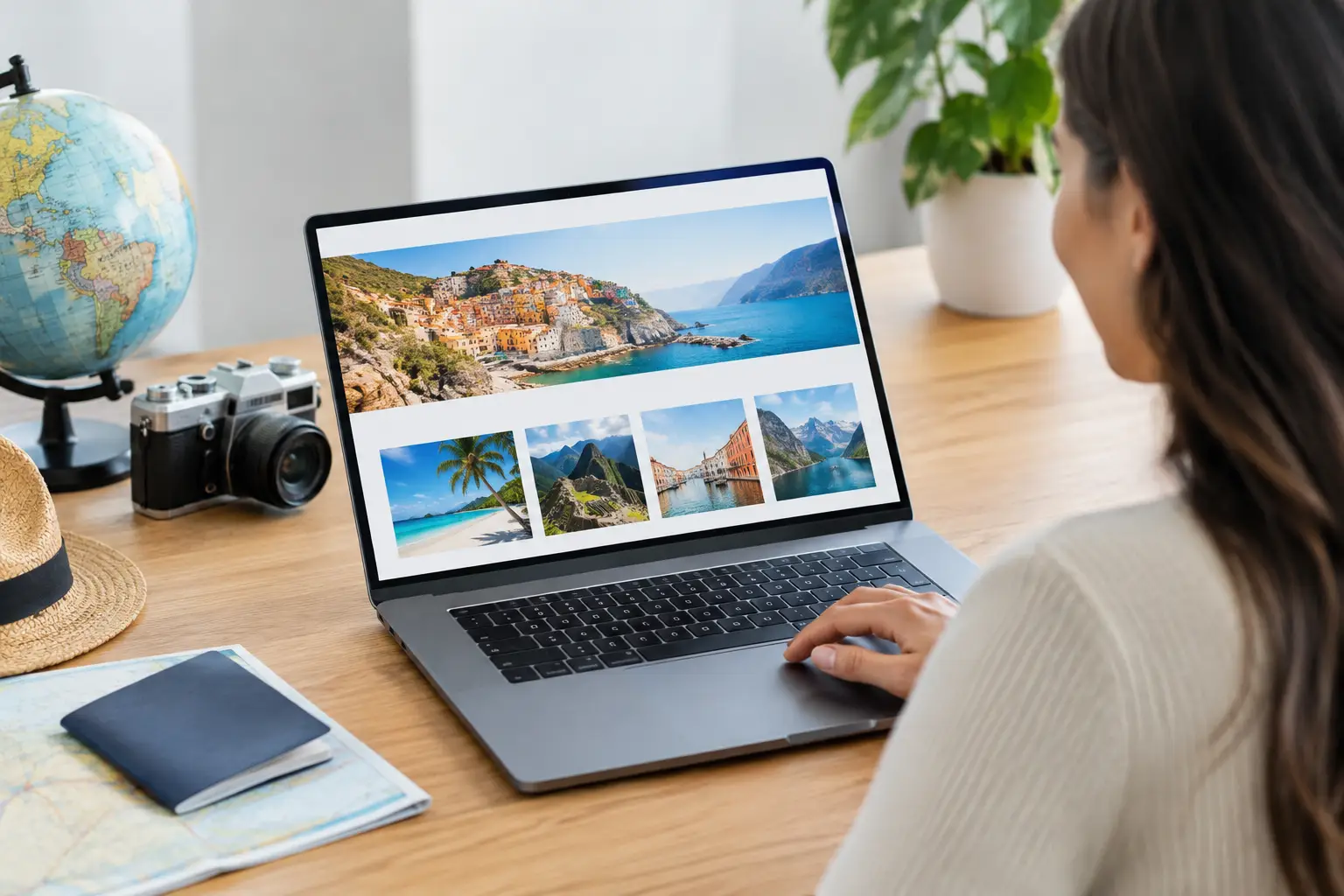
A travel storefront is not simply a page with travel images and a booking button. It is the operating point where a traveler decides whether the next step feels clear, credible, and worth taking. For an independent travel business, it also has to support the representative behind the page without requiring that person to build reservation technology, supplier access, privacy processes, and customer workflows from the ground up.
That dual purpose changes how a storefront should be evaluated. A traveler needs practical access to trip options and a recognizable contact. A business owner needs a consistent digital presence that can support customer relationships over time. The best result is not the flashiest page. It is a functional path from travel interest to informed action.
A Travel Storefront Has Two Jobs
For leisure travelers, the first job is simple: reduce friction. Someone planning a cruise, hotel stay, family vacation, or short getaway should be able to identify where to begin and when personal assistance is available. Travelers do not all arrive with the same level of certainty. One person may know the dates and destination; another may only know a budget, a group size, and the need for help sorting through options.
A useful storefront accounts for both. It provides an organized entry point to travel resources while preserving the option to work with a real person. That matters when details become more complicated, such as coordinating rooms, comparing itinerary timing, understanding supplier terms, or planning around a special occasion.
The second job is operational. Independent representatives need a business presence that is connected to reliable platform infrastructure. A standalone website may look polished, but appearance alone does not provide booking systems, centralized tools, standardized policies, technical upkeep, or supplier-related support. Those functions are what allow a representative-led business to serve customers consistently rather than relying on scattered manual processes.
Why the Personal Contact Still Matters
Travel purchasing is often treated as a purely self-service transaction. That works for some travelers and some trips. A frequent traveler booking a familiar route may prefer speed and minimal interaction. But a lower price shown on a screen does not automatically mean the trip is the better value once timing, room type, policies, transfers, and traveler needs are considered.
Personal guidance is most useful when the traveler needs context, not pressure. A representative can help a customer clarify priorities, identify questions that should be asked before purchase, and understand what is included in an option. The right support does not replace a traveler’s decision. It gives that decision a clearer foundation.
This is especially relevant for travelers who are new to planning larger trips, coordinating family travel, or comparing travel benefits over more than one vacation. They may want accessible options without spending hours moving between unrelated sites. A storefront connected to an independent representative creates a direct point of continuity: the customer knows where to return when the next travel need arises.
GLENDATRAVEL reflects this model by pairing an individual business identity with a centralized travel platform. The personal identity helps establish a recognizable contact, while the supporting infrastructure provides the structure required to operate within a broader travel-services environment.
The Infrastructure Behind a Credible Storefront
Customers usually judge a travel business by what they can see: clear information, responsive communication, and an orderly purchase path. Much of the work that supports that experience is not visible. Hosted systems, security practices, privacy controls, software maintenance, and standardized platform processes all contribute to whether a storefront can function dependably.
This is why technical verification pages and compliance-oriented system notices have a role in a travel business ecosystem, even when they are not designed as customer marketing pages. They indicate that the branded business operates within managed digital infrastructure rather than an unmanaged web presence. For customers, that can support confidence that there is an established operational framework behind the representative’s storefront.
For the independent business owner, centralized infrastructure removes a major barrier to entry. Building a travel business independently can require significant time, technical knowledge, vendor coordination, and ongoing maintenance. A platform-based model does not remove the need for customer service, ethical communication, or consistent follow-through. It does provide a structured base so the representative can focus more of their effort on serving and developing customer relationships.
What Travelers Should Expect Before They Buy
A travel storefront should make the next step understandable, but travelers should still approach any travel purchase with practical questions. Travel arrangements can involve supplier-specific rules, availability changes, cancellation conditions, deposit requirements, and travel documentation responsibilities. Support is valuable, but it is not a substitute for reviewing the terms tied to a specific reservation.
Before committing, travelers should confirm the total trip components, not just the headline price. A package may differ from another in dates, airport choices, room category, baggage, transfers, resort fees, dining, or flexibility. The best option depends on the trip. A family with fixed school-break dates may value change policies more than a small price difference. A couple planning a weekend getaway may prioritize location and flight times instead.
Travelers should also provide accurate information early. Names must match required identification, and timing matters when passports, visas, vaccinations, or destination entry requirements apply. A storefront can provide access and support, but travelers remain responsible for ensuring that their documents and eligibility meet the requirements of their chosen itinerary.
What Independent Representatives Should Build
A branded storefront is a starting point, not an automatic customer base. The representative still needs to create a service standard that gives people a reason to return. That starts with being clear about what help is available, responding within reasonable expectations, and avoiding claims that cannot be verified for a particular trip.
Consistency matters more than constant promotion. A business owner who records customer preferences, follows up after travel, and communicates changes carefully can develop repeat relationships over time. That approach is more sustainable than treating each inquiry as a one-time transaction.
Representatives should also understand the boundaries of their role. They can guide customers through available travel options and platform resources, but they should not present general information as legal, medical, tax, or immigration advice. When a customer’s question depends on official requirements or personal circumstances, the appropriate source is the relevant qualified professional or authority.
The same discipline applies to travel-business opportunities. A platform can provide technology, systems, and a business framework, but individual outcomes depend on effort, skills, customer service, market conditions, expenses, and compliance with applicable requirements. Clear expectations protect both prospective representatives and the customers they hope to serve.
A Better Standard for the Travel Storefront
The strongest storefronts make travel feel more manageable without pretending that every trip is simple. They give customers a route to options, provide access to informed support, and operate through systems designed for continuity. They also leave room for the fact that some travelers want self-service, while others need more guidance before making a meaningful purchase.
For independent travel businesses, that balance is the real value of a platform-supported storefront. The representative remains visible and accountable to the customer, while centralized infrastructure handles the functions that are difficult to reproduce alone.
When planning your next trip, start with the details that will shape the experience most: who is traveling, when flexibility matters, what is truly included, and where you may need help. A clear answer to those questions makes it easier to use a travel storefront as it was meant to be used – as a practical place to move from interest to a well-considered plan.
Leave a Reply